The dramatic capture of Venezuelan President Nicolás Maduro has handed President Donald Trump a rare strategic opening — one that could reshape Venezuela’s crippled oil industry, redirect global crude flows and weaken the foothold that rivals like Russia, China and Iran have built in the Western Hemisphere.
But unlocking the world’s largest oil reserves won’t be easy. Years of political turmoil, sanctions and infrastructure collapse mean U.S. energy companies face steep risks — and any production rebound would take time, capital and sustained political stability.
Now, Trump and energy CEOs must address three key challenges in order to seize opportunities.
1. Venezuela holds massive oil reserves, but production remains severely constrained
Venezuela, a country almost twice the size of California, sits atop extraordinary wealth.
With more than 300 billion barrels of proven oil reserves, Venezuela holds more crude than established energy heavyweights like Saudi Arabia, Iran and Kuwait. The Latin American country’s reserves are nearly quadruple those of the United States.
Once a major oil producer, the country pumped about 3.5 million barrels a day in the late 1990s. Since then, its oil industry has sharply deteriorated, with production falling to roughly 800,000 barrels a day, according to energy analytics firm Kpler.
A key reason: much of Venezuela’s oil is difficult and expensive to extract.
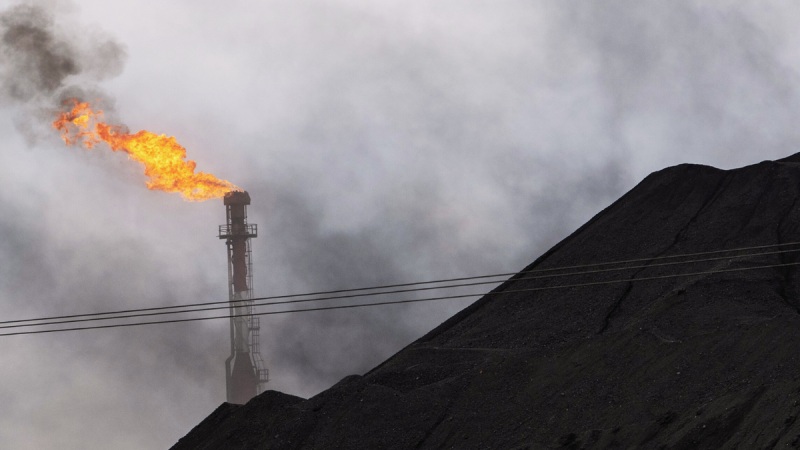
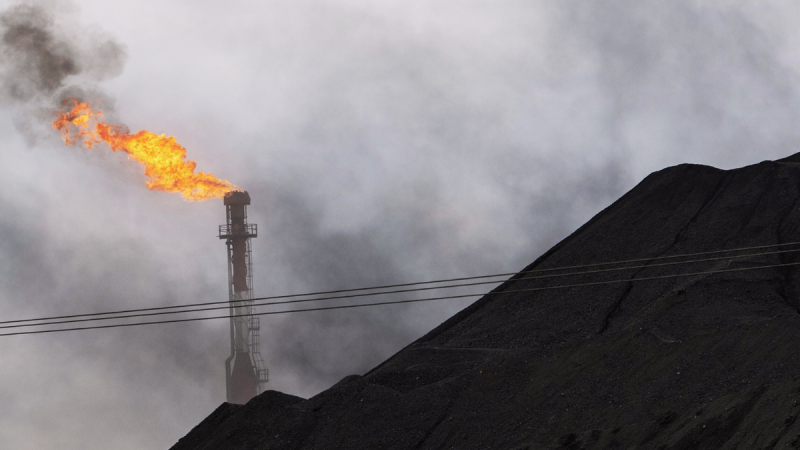
The country’s reserves are dominated by heavy and extra-heavy crude, which is costly to extract and relies on specialized equipment and refining capacity that have deteriorated after years of underinvestment, U.S. sanctions and political instability.
Similar dynamics have unfolded in countries such as Iran and Libya, where turmoil, financial distress and crumbling infrastructure have kept vast reserves locked underground.
As a result, scaling operations back up would require significant time, capital and technical expertise, with any production increase likely to be gradual rather than immediate.
2. Political risk remains a major concern for American energy companies
Decades of political instability, shifting regulations and U.S. sanctions have made Venezuela a high-risk environment for long-term investment.
That risk dates back to the mid-2000s, when then-President Hugo Chávez reshaped Venezuela’s relationship with international energy companies by tightening state control over the oil industry.
Between 2004 and 2007, Chávez forced foreign companies to renegotiate their contracts with the government. The new terms sharply reduced the role and profits of private firms while strengthening Venezuela’s state-owned oil company, Petróleos de Venezuela, S.A. (PDVSA).
The move drove some of the world’s largest oil companies out of the country.
ExxonMobil and ConocoPhillips exited Venezuela in 2007 and later filed claims against the government in international arbitration courts. Those courts ultimately ruled in favor of the companies, ordering Venezuela to pay ConocoPhillips more than $10 billion and ExxonMobil more than $1 billion. The cash-strapped country has paid only a fraction of those awards.
That history looms over Trump’s latest proposal.
Trump said on Saturday he would seek to revive the once-prominent commodity by mobilizing investment from major U.S. energy companies.
‘We are going to have our very large United States oil companies go in, spend billions of dollars, fix the badly broken oil infrastructure and start making money for the country,’ Trump said during a news conference at Mar-a-Lago.
It remains unclear whether U.S. energy companies are prepared to do so. American firms have yet to say whether they plan to return to Venezuela to resurrect an oil industry hollowed out by years of neglect.
Chevron, the only U.S. oil titan operating in Venezuela, said in a statement to Fox News Digital that it was following ‘relevant laws and regulations.’
‘Chevron remains focused on the safety and well-being of our employees, as well as the integrity of our assets,’ a Chevron spokesperson added.
ConocoPhillips wrote in a statement to Fox News Digital that it is monitoring the developments in Venezuela as well as the ‘potential implications for global energy supply and stability.’
‘It would be premature to speculate on any future business activities or investments,’ a spokesperson for ConocoPhillips added.
ExxonMobil, the largest U.S. oil company, did not immediately respond to a request for comment.
3. The push reflects a broader effort to leverage energy for geopolitical influence
As U.S. and European companies withdrew from Venezuela, Russia, China and Iran expanded their footprint in the country’s energy sector, using financing, fuel shipments and technical support to maintain influence.
That shift has also reshaped how Venezuelan oil is traded. Sanctions have fueled the rise of so-called ‘ghost ships,’ nondescript oil tankers that disable tracking systems to quietly move Venezuelan crude to foreign buyers outside traditional markets. The opaque trade has reduced transparency in global oil flows while helping Caracas sustain exports despite financial isolation.
For the Trump administration, the outcome has underscored an uncomfortable trade-off: restricting access to U.S. markets can limit revenue for sanctioned governments, but it can also push them deeper into the orbit of strategic rivals, turning energy policy into a front line of geopolitical competition.